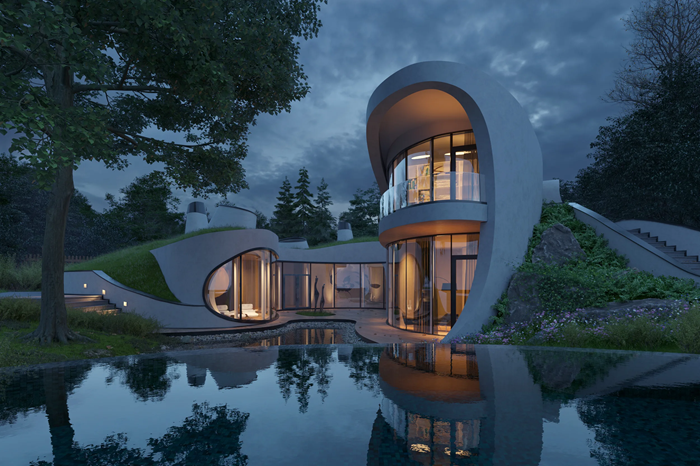
Architectural visualization is the process of creating a visual representation of a future building or interior based on drawings, concepts, and technical specifications.
It translates a design from plans and dimensions into a clear visual image, allowing one to evaluate proportions, materials, lighting, environment, and atmosphere, as well as to anticipate how the object will be perceived in the real space.
The essence of architectural visualization lies in precise and convincing communication between the architect, client, and other project participants: it helps coordinate decisions, identify contentious issues before construction begins, and present the idea to the audience. In professional practice, this is often formalized as commercial architectural rendering services, when visual materials are created for sales, marketing, and public display of a project.
Defining the Term Through Result: Which Images Are Considered Project Visualizations
In architectural visualization, the term is conveniently defined “through result”: project visualization is any image that translates the concept from descriptions, drawings, and specifications into a visual representation of the future object or space. A key characteristic is the image’s ability to show how the project will look under given conditions, rather than simply recording geometry or listing parameters.
With this approach, the tools (3D package, graphics editor, neural network, or manual technique) are not as important as the final function of the image: it should help evaluate volume, composition, materials, lighting, environment, and perceived atmosphere. If an image answers questions of perception—”what will a person see?”, “what will the character of the façade be?”, “how will the interior feel?”—then it’s a visualization.
What types of images are considered visualizations?
Project visualizations include images that model the appearance and/or operating environment of a facility. These can be highly photorealistic or symbolic, but all are aimed at conveying the visual result, not the technical accuracy of the drawing. It is important that the image is related to a specific design solution and reflects the selected volumes, finishes, proportions, light, and context.
- Exterior views: facade perspectives, pedestrian-level views, aerial views, panoramas showing the property in its surroundings and landscape.
- Interior views: room perspectives, demonstration of lighting scenarios, furniture and object arrangement, textures and color combinations.
- Scenario images: day/evening options, different weather conditions, seasonality, occupancy of people and vehicles for scale.
- Visualization of materials and components in perception: close-ups, where the emphasis is on texture, joints, and reflections—provided that they show the future appearance, and not just the layout of the component.
- Conceptual images: artistic views, collages, matte painting, where convention is allowed, but the connection with the design composition and atmosphere.
The Boundary Between Visualization and Project-Specific Graphics
Not all project graphics are automatically visualizations. Drawings, diagrams, and analytical charts convey structure and data, but they don’t always provide a sense of the visual outcome. For example, a floor plan, section, or elevation in orthographic projection often serves as a technical description. However, they can be considered visualizations if they are supplemented with techniques that translate them into the perceptual plane: chiaroscuro, materials, environment, expressive presentation, perceptible depth, and a “life-size” scale.
In a practical sense, the test is simple: if the image allows the client or team to make decisions about the appearance (materials, color, light, character of the space) and see the project as a future reality, then it serves as a visualization. If it primarily answers the question of “how it’s built” and “what are the dimensions,” while remaining neutral in impression and atmosphere, then it is more of a drawing or information graphic, and not a visualization in the full sense.