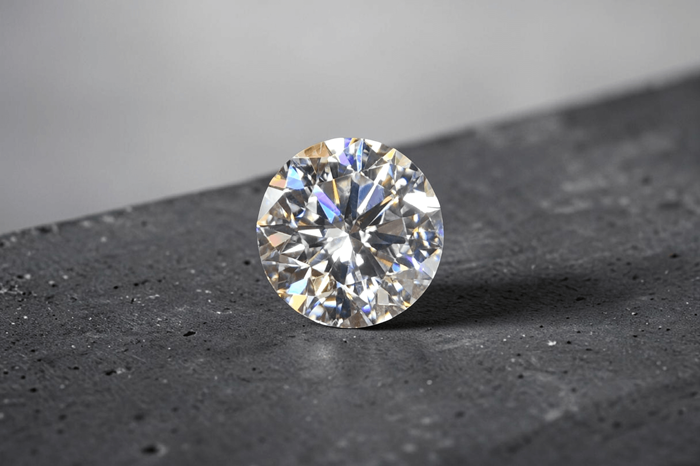
Buying a diamond involves more than just considering its sparkle and size; several factors influence its value and quality. Before making a purchase, it is important to understand the key evaluation criteria—cut, clarity, color, and carat weight—and to verify that the stone comes with a certificate from a reputable gemological laboratory.
This allows for accurate price comparisons and helps you avoid overpaying for marketing hype.
Pay special attention to the stone’s origin, the consistency between its characteristics and the accompanying documentation, and how the diamond appears under different lighting conditions. Before finalizing your decision, clarify the return policy, warranty terms, and the possibility of having the stone independently inspected by a jeweler or gemologist. You can find more information about diamonds on the https://luxebrokersgroup.com/sell/diamonds/.
Decoding the certificate: how to verify the report number, laboratory, specifications, and document authenticity
Verifying a certificate begins with cross-referencing key identifiers: the report number, the laboratory name, and the “4Cs” (Carat, Color, Clarity, and Cut). If any of these elements cannot be confirmed—whether on the laboratory’s website, on the stone itself, or through physical measurements—it is best to pause the purchase until the matter is clarified.
Verifying the report number and laboratory
The report number is the primary point of verification. It usually appears on the first page of the certificate and is often duplicated as a barcode or QR code. Your task is to visit the laboratory’s official report verification page and enter the number manually rather than relying solely on the QR code; counterfeit documents often link to fake websites or “mirror” sites.
Pay attention to the laboratory itself: the value of the document depends on the lab’s reputation and the strictness of its standards.
If the certificate lists a little-known organization, you should critically assess its market reputation and compare the stated specifications with the results of an independent gemological verification. An important detail: the laboratory’s name, logo, and certificate layout must be consistent—any unusual fonts, blurred elements, atypical formatting, or errors in terminology should raise suspicions.
- Cross-reference the report number on the document with the laboratory’s database (via manual entry).
- Verify the report date and status (confirm the report is active and check for any notations regarding updates or replacements).
- Compare the certificate’s format with the laboratory’s standard template: section structure, terminology, and the order of parameters.
Verifying parameters and document authenticity
Once the report number is confirmed, proceed to the stone’s specifications. The certificate must list the carat weight, color, clarity, and cut, as well as dimensions in millimeters, shape, and characteristics regarding symmetry, polish, and fluorescence. Compare not only the prominent “4Cs” values but also the technical details; dimensions and proportions can often reveal discrepancies even when the primary parameters have been convincingly forged.
A separate point to check is the presence and accuracy of the report number laser-inscribed on the girdle (if such an inscription is specified). For a stone with this inscription, the number must be legible under magnification and match the number in the document and the laboratory’s online database exactly. If the inscription is missing—despite being listed in the report—or if the number differs by even a single character, there is a serious risk that the stone has been swapped.
- Compare mass and dimensions: the carat weight and geometry (e.g., diameter and height) must be logically consistent with one another.
- Check the shape and cut style (round, princess, oval, etc.); any discrepancy immediately signals a problem.
- Cross-reference quality parameters—cut, symmetry, polish, and fluorescence—as these details are often overlooked when creating forgeries.
- Check the inclusion plot (if available): the nature of the inclusions acts as a unique “fingerprint” that must match when inspected by a specialist.
- Assess the document’s integrity: any signs of alteration, inconsistent terminology, or fluctuating values across different sections of the report warrant verification by an independent gemologist.
The final step is to connect all the dots: confirm the report number on the laboratory’s official website, ensure the database details match the paper or electronic version, and verify that the physical stone corresponds to the recorded dimensions and (if applicable) laser inscription. If there is not a perfect match, it is safer to request a re-examination or walk away from the deal than to assume the discrepancy is “insignificant.”